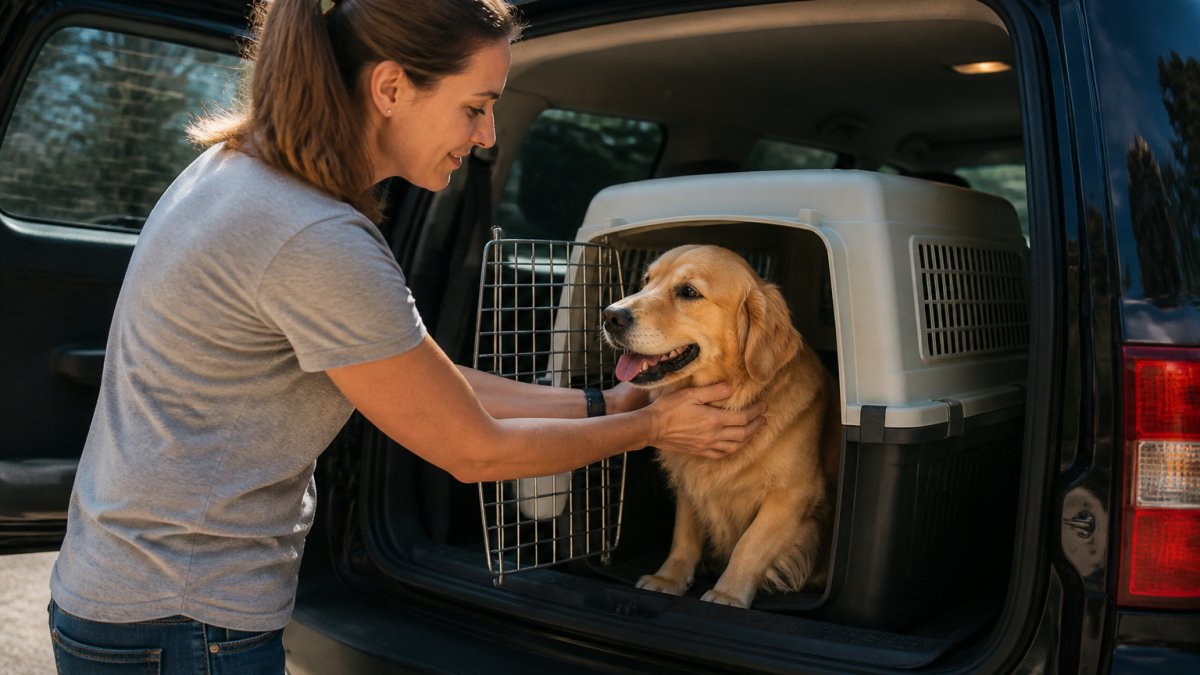
Quick summary: Reliable ground transport for dogs is a door-to-door service where a professional driver moves your dog by road in a climate-controlled vehicle with planned rest stops, secure restraints, and owner updates along the way. Verify the transporter’s USDA registration and get insurance, contingency plans, and itemized costs in writing before paying a deposit.
- Ask for the driver’s name, phone number, and vehicle description before pickup.
- Private ground transport suits anxious, elderly, or special-needs dogs but costs the most.
- Pack food for the full trip plus two extra days, labeled with feeding instructions.
- Send a one-page care sheet covering feeding, medication, triggers, and vet contact details.
- Get two or three written quotes on the same route and compare itemized lines side by side.
What Reliable Ground Transport for Dogs Actually Means
Reliable ground transport for dogs is a door-to-door service in which a professional driver moves your dog by road in a safe, climate-controlled vehicle, with planned rest stops, secure restraints, and updates for the owner along the way. You can also see what’s included in every trip before you judge reliability.
The difference shows up in small details. Who handles the dog at each stop? What happens at night? Can you reach a person by phone at 9 p.m. when your dog is three states away?
Why Door-to-Door Beats Airport Cargo for Most Dogs
Air cargo moves fast, but it asks a lot of a dog: a noisy terminal, a crate, strangers loading and unloading, and long stretches with no familiar face. For anxious, elderly, or special-needs dogs, that continuity often decides the outcome.
The trade-off is time. A cross-country drive takes days, not hours. If your timeline is tight, air may be the only option.
How to Verify a USDA-Registered Pet Transporter
A USDA-registered pet transporter holds a current federal registration for commercial animal transport. Verification is straightforward: ask for the registration details and check them against USDA Animal and Plant Health Inspection Service licensing records before you pay a deposit.
Then go further than the certificate. Ask three questions:
- Who actually drives? A registered company can still subcontract to whoever is available.
- What vehicle? Ask for photos and the make and model.
- Who else is on board? Shared loads mean exposure to unfamiliar animals.
A common mistake is booking on price alone and discovering the “private” trip is a shared van once the deposit clears. You can also read what customers say from breeders, rescues, and families.
Insurance, Contingency Plans, and What Happens If Something Goes Wrong
Ask any provider what happens if your dog gets sick or injured mid-route. A trustworthy answer names a specific protocol: which vet, who pays, who calls you, and how fast.
Get the coverage in writing before booking: whether the transporter carries liability insurance, what it covers, and the plan for a vehicle breakdown, weather delay, or a dog that refuses to eat.
Long-Distance Dog Transport: Private, Shared, or Air?
Three options cover most long-distance moves, and each fits a different dog and budget.
| Option | Best for | Main trade-off |
|---|---|---|
| Private ground transport | Anxious, elderly, or special-needs dogs | Highest cost, slowest pace |
| Shared ground van | Budget-conscious, easy-going dogs | Multiple dogs, more stops |
| Air cargo | Tight timelines, long routes | High stress, crate confinement |
Private ground transport gives one dog or household the whole vehicle. Shared vans split costs across several animals, but your dog rides beside strangers. Air cargo is generally faster over long distances, though it can be stressful for many dogs.
Your Dog Transport Safety Checklist Before Pickup
Run this checklist in the week before pickup so the trip starts calm. It covers paperwork, restraint setup, and the dog-welfare details that separate a smooth trip from a stressful one.
Paperwork and Verification
- Confirm the transporter’s USDA registration in writing
- Get the driver’s name, phone number, and vehicle description
- Ask for the update schedule in writing and confirm how often you will hear from the driver
- Have your vet’s contact details ready and share them with the transporter
Restraint and Vehicle Setup
Ask what restraint the transporter uses and why. Confirm the vehicle is climate-controlled and ask how the driver manages temperature at rest stops. If your dog is crate-trained, send the crate your dog already knows; if not, say so at booking so the driver can plan a harness setup.
Feeding, Hydration, and Medication
- Pack food for the full trip plus two extra days, labeled with feeding instructions
- Send medications with written dosage and timing, in the original packaging
- Ask the driver to keep feeding times close to your dog’s normal schedule
- Provide a water bottle from home so the water tastes familiar
- Confirm how often the driver plans rest stops and water breaks
Feed a lighter meal a few hours before pickup rather than a full meal right before the dog gets in the vehicle. Mention car sickness at booking, not at pickup, so the driver can plan for it.
Anxiety, Comfort, and Behavior Notes
- Provide a favorite blanket or toy that smells like home
- Write down your dog’s triggers: thunder, other dogs, men in hats, whatever applies
- Note whether your dog is an escape risk at rest stops
- Tell the driver how your dog signals needing to relieve itself
A dog that rides well at home usually rides well on a long trip, provided the restraint is right and the driver is patient.
Veterinary Clearance
For elderly dogs, dogs on medication, or dogs with a known health condition, ask your vet whether the dog is fit for a multi-day road trip and get that in writing.
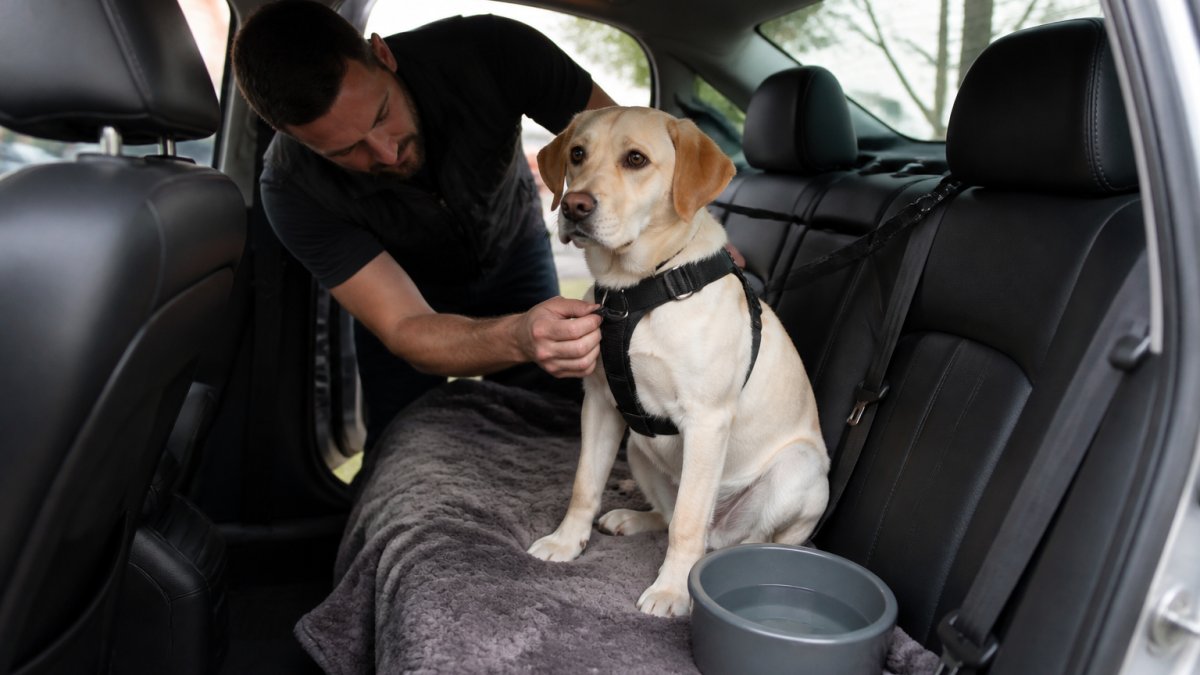
Pro tip: Send a one-page care sheet with the dog: feeding times, medication schedule, triggers, vet phone number, and your mobile number. Drivers read paper when they are tired, and a one-pager beats a long text thread.
What Pet Transport Cost Really Covers
Pet transport cost depends on distance, vehicle type, and how much attention your dog needs. To see how pricing works for your route, review the distance-based quote details, or request a quote for current pricing.
What Moves a Quote
- Dog-specific handling. Medication schedules, extra rest stops, a dog that cannot be crated, or a dog over a certain weight can each add a surcharge. Get these disclosed before the deposit, not at pickup.
What a Written Quote Should Itemize
Do not compare quotes on the headline number alone. Ask each provider to break the quote into clear line items so you can compare scope, not just totals:
- Base pickup fee and per-mile rate
- Fuel and tolls, included or billed separately
- Overnight hotel stays, included or charged as an extra
- Restraints, crates, and bedding, provided or bring-your-own
- Daily updates and photo check-ins, standard or a premium add-on
Watch out: A quote that is dramatically lower than the others usually means one of three things: shared occupancy, a subcontractor driving instead of the company you booked, or add-on fees that appear after the deposit clears. Ask directly which one applies.
How to Build a Route Estimate Before You Call
You can get a rough sense of a private ground quote by considering loaded miles, number of overnight stops, and occupancy. Get two or three written quotes on the same route and dates, then compare the itemized lines side by side. The lowest total is not always the lowest cost once add-ons, deposit terms, and insurance limits are on the table.
Key takeaway: Reliability is priced, not promised. A quote that itemizes overnight care, insurance, and update frequency tells you more about the trip than a lower number that itemizes nothing.
Request a Quote and Lock In Your Travel Dates
Availability tightens around moving season and holidays, so book as early as your plans allow.
At Precious-Passengers, every trip is private and solo-passenger, with climate-controlled vehicles, approved safety restraints, daily location updates, and a transporter who stays with your dog at pet-friendly hotels overnight.
Give your dog a calm, door-to-door journey. Get in touch with your route, your dog’s details, and your timeline.
Frequently Asked Questions
How do I find reliable ground transport for my dog?
Start by confirming the company is a USDA-registered pet transporter and ask for proof of registration, not just a claim on a website. Then compare at least two quotes, read independent reviews, and ask how dogs are secured in the vehicle. Request a quote in writing so pickup, delivery, and what is included are all clear before you pay a deposit.
Is ground transportation safe for dogs?
Ground transport is generally low-risk when the provider uses approved safety restraints, keeps the vehicle climate-controlled, and limits how many dogs share a ride. Private, solo-passenger trips reduce stress because your dog is not exposed to unfamiliar animals. Ask about the driver’s handling experience, rest stops, and overnight arrangements.
How much does pet transport cost, and what changes the price?
Cost depends on travel distance, whether the trip is private or shared, the number of overnight stays, and your dates. Because rates vary by route and season, get a written quote rather than relying on a general estimate. Compare what each quote includes so you are comparing the full service, not just the headline number.
How far in advance should I book long-distance dog transport?
Book as early as you can, ideally several weeks before your move or pickup date, especially in busy moving seasons. Booking early also gives you time to complete a safety checklist, gather vaccination records, and prepare your dog for the ride.